

Release time:2025-12-01 Hit:620
Food safety is a major fundamental project related to the national economy and people's livelihood, and an important benchmark for measuring the modernization level of the national governance system and governance capacity. In September 2022, the State Council Food Safety Commission and the State Administration for Market Regulation successively issued opinions on promoting the implementation of local management responsibilities for food safety and regulations on supervising and managing the implementation of food safety main responsibilities by enterprises, marking the formal establishment and comprehensive deployment of the work mechanism for implementing the "two responsibilities" for food safety.
On November 18th, the Experience Exchange Meeting on Implementing the "Two Responsibilities" of Food Safety, hosted by the State Council Food Safety Office and the State Administration for Market Regulation, and undertaken by the Jiangsu Provincial Food and Drug Safety Office and the Jiangsu Provincial Administration for Market Regulation, was held in Wuxi, Jiangsu Province. The meeting pointed out that in the past three years, food safety offices and market supervision departments at all levels have followed the work deployment of "laying the foundation in one year, covering all areas in two years, and achieving results in three years", worked together to overcome difficulties, successfully completed various target tasks, effectively promoted the continuous improvement of the mechanism for implementing food safety responsibilities, significantly increased the efforts of local party committees and governments to grasp food safety, significantly improved the risk prevention and control capabilities of production and operation entities, continuously enhanced the overall food safety supervision capabilities of the system, and embarked on a new path of food safety governance that is in line with China's national conditions and demonstrates institutional advantages.
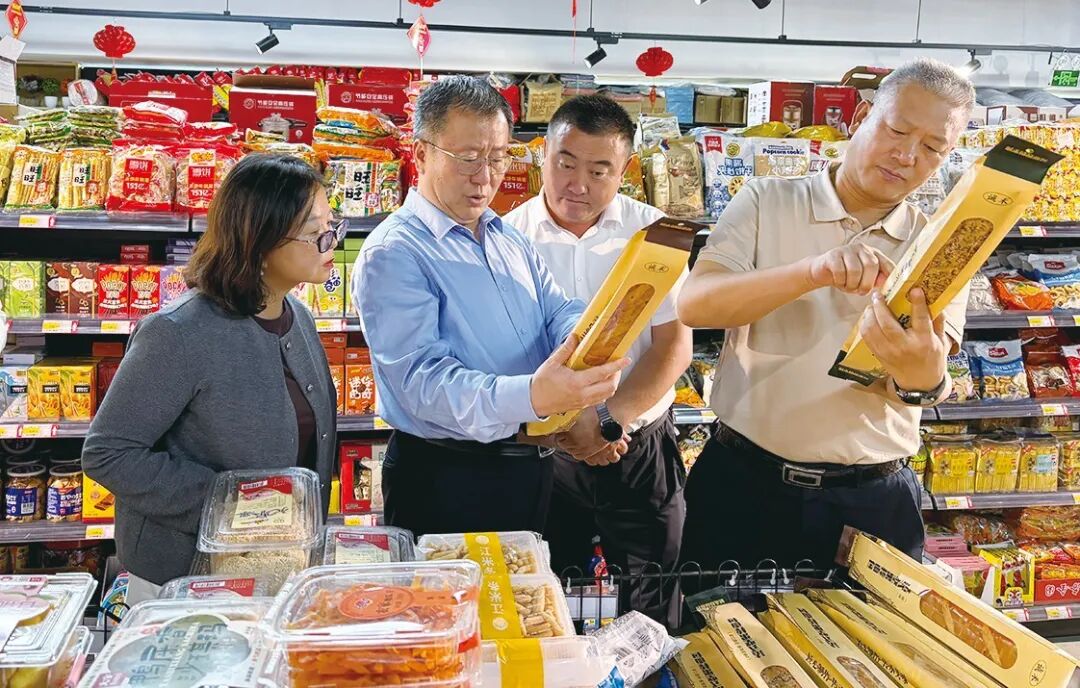
In September 2024, Wang Xiaoyang, Secretary of the Party Group and Director of the Market Supervision Bureau of Gansu Province, conducted a research on the market supervision work in Dunhuang City, requiring strict implementation of the "four strictest" requirements, and tightening the main responsibility and local management responsibility.
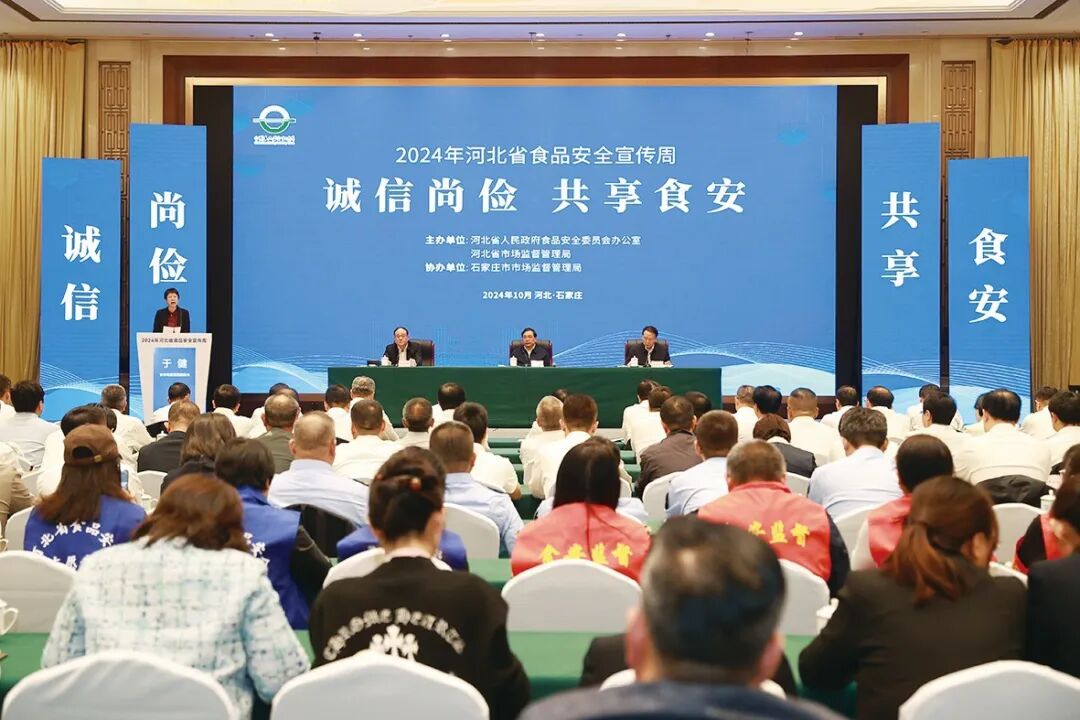
At the launch ceremony of the 2024 Hebei Food Safety Promotion Week, the head of the Hebei Provincial Market Supervision Bureau stated that in 2024, Hebei will further optimize the local management responsibility mechanism, and achieve 100% coverage, supervision completion rate, and problem rectification rate at the provincial, municipal, county, township, and village levels
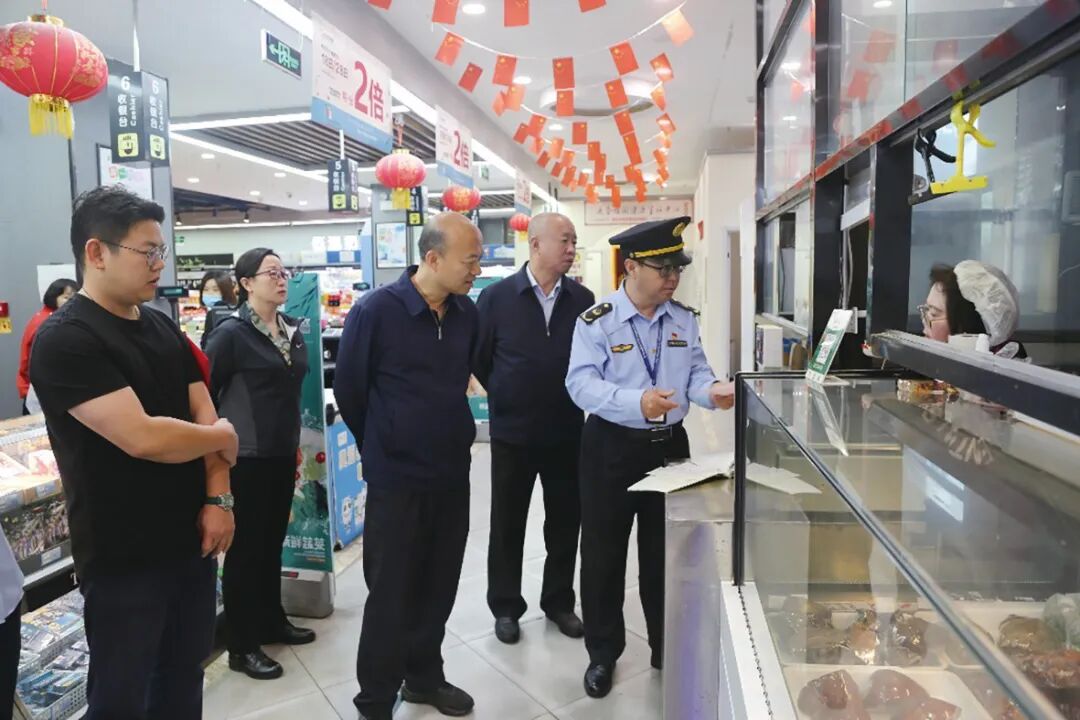
Before the Dragon Boat Festival in 2024, the supervision team of Yanqing District of Beijing will go to catering service units and large supermarkets to carry out food safety "two responsibilities" supervision, pre festival food safety inspection and other work to ensure that the people in the area have a happy and peaceful festival.
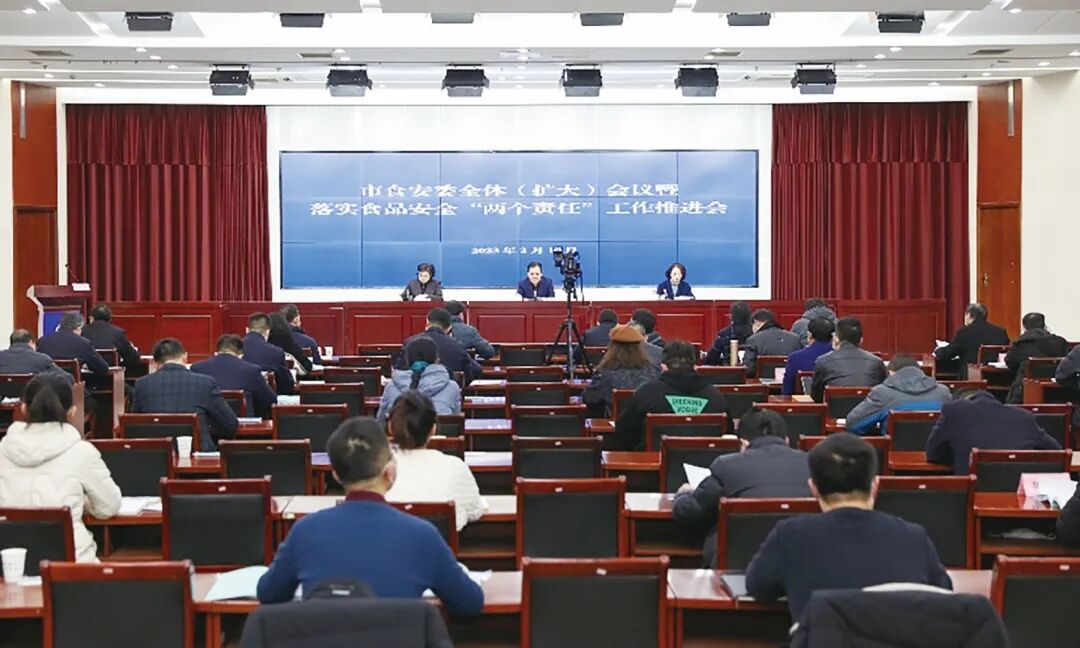
On February 10, 2023, Nantong City, Jiangsu Province held an expanded meeting of the Food Safety Committee and a promotion meeting for the implementation of the "two responsibilities" for food safety.
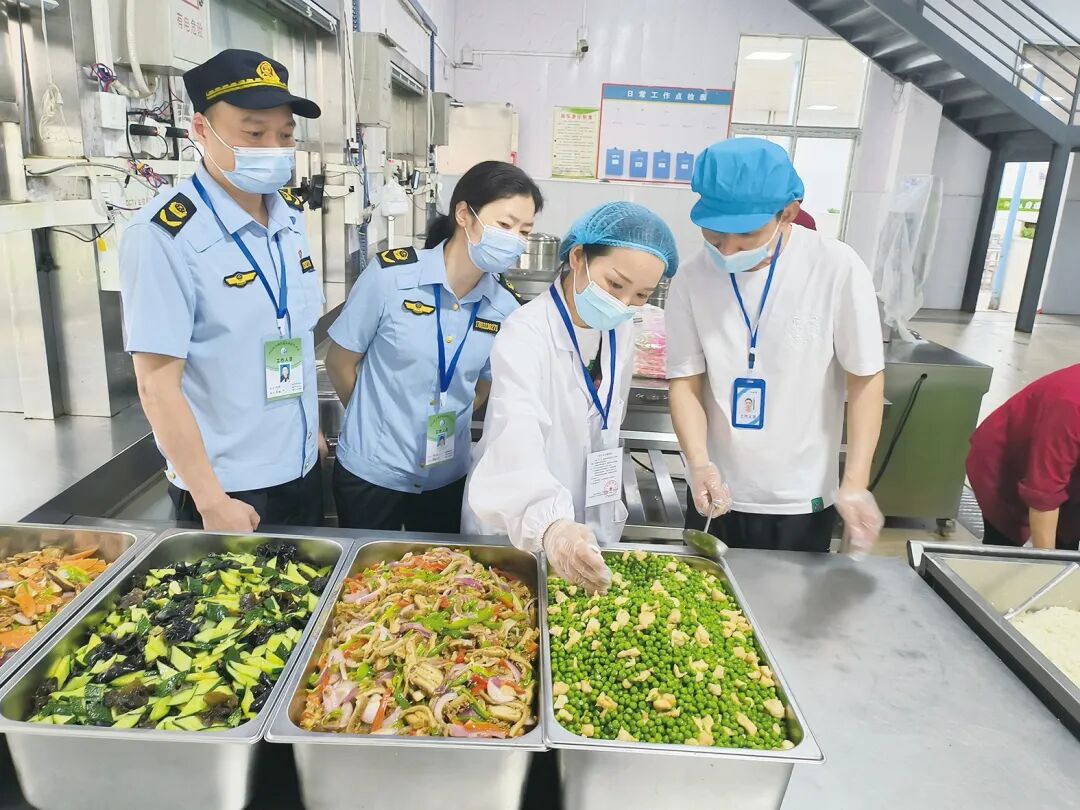
In 2024, the Hubei Provincial Market Supervision Bureau will promote the special rectification of campus food safety and the deep integration of "two responsibilities", carry out summer school canteen food safety inspections, and comprehensively consolidate the "two responsibilities" of campus food safety.
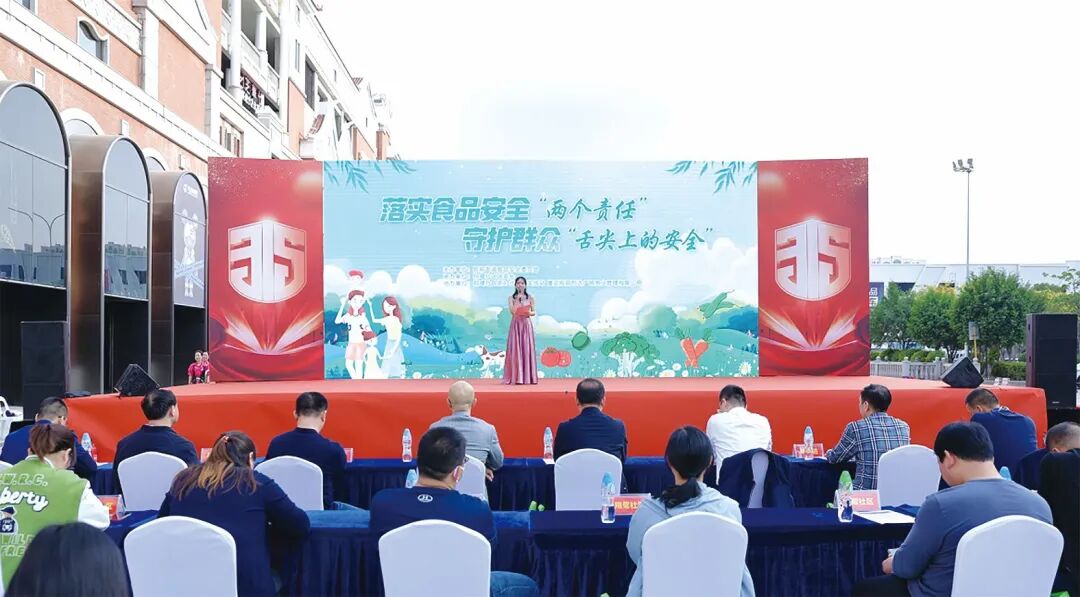
In March 2023, the Party Working Committee and Office of Dianqian Street, Huli District, Xiamen City, Fujian Province launched the "3.15" publicity campaign in Xianglu Community.
The activity provides a detailed explanation of the relevant regulations and food safety knowledge regarding the "two responsibilities" of food safety.
On the occasion of the third anniversary of the implementation of the "two responsibilities" for food safety, a systematic summary and analysis of the progress, practical models, and future directions of the implementation of the "two responsibilities" is of great significance for consolidating achievements, deepening understanding, and promoting the modernization of the food safety governance system and governance capacity.
1、 Policy evolution and historical background: from clarifying responsibilities to deepening the entire chain
The proposal and deepening of the "two responsibilities" work mechanism is a significant leap in China's food safety governance concept and practice. The core lies in clarifying and consolidating two key responsibilities: first, the territorial management responsibility of local party committees and governments, aimed at solving the problem of vacant grassroots regulatory responsibilities and inadequate pressure transmission; The second is the corporate responsibility of food producers and operators, aimed at stimulating internal motivation and preventing risks from the source.
In terms of implementation, it can be divided into two stages. The first stage, the institutional foundation period (2022): marked by the introduction of opinions to promote the implementation of local management responsibilities for food safety and the supervision and management regulations for the implementation of food safety main responsibilities by enterprises, a local management responsibility implementation mechanism of "layered and graded, precise prevention and control, end of pipe efforts, and end of pipe effectiveness" has been established, as well as an enterprise main responsibility implementation mechanism of "three types of people (enterprise leader, food safety director, food safety officer), three things (daily control, weekly investigation, monthly dispatch), and three accounts (corresponding records)"
Phase 2, Deepening and Expanding Period (2023-2025): With the deepening of practice, supporting systems continue to be improved. The State Administration for Market Regulation has successively issued detailed regulations for centralized dining units, catering service chain enterprises, etc. Local regulations, standards, and work guidelines have also been actively introduced in various regions. Especially with the release of the "Opinions of the General Office of the Communist Party of China Central Committee and the General Office of the State Council on Further Strengthening the Supervision of the Whole Chain of Food Safety" in 2025 and the communiqu é of the Fourth Plenary Session of the 20th Central Committee of the Communist Party of China, the implementation of the "two responsibilities" will be placed under the grand narrative of "full chain supervision", requiring that the implementation of responsibilities must run through all links of food from farmland to dining tables, achieving deeper level systematic and comprehensive governance.
The practice of the third anniversary has shown that implementing the "two responsibilities" is not only a temporary solution to the current food safety challenges, but also a fundamental strategy to promote the construction of long-term governance mechanisms. Its integration with the concept of "full chain supervision" marks a new stage in China's food safety governance with clearer responsibilities, more precise prevention and control, and a more sound system.
2、 Implementation of territorial management responsibilities: precise implementation of policies and regional practices under hierarchical levels
The territorial management responsibility, as an important pillar of the "two responsibilities", has formed a distinct feature of "high-level coordination, graded guarantee, and precise policy implementation" in the past three years. By combining geographical environment, industrial characteristics, and regulatory difficulties in different regions, unique implementation paths have been explored, demonstrating the governance wisdom of "adapting measures to local conditions and implementing classified control".
The guarantee mechanism has been fully established and effectively operated nationwide. According to incomplete statistics, insurance officials at all levels have covered tens of thousands of food production and operation entities, and the completion rate of supervision and the rate of problem rectification have significantly improved. A work loop of "high-level promotion, list management, inspection and assessment, and training empowerment" has been widely formed in various regions. At the same time, due to differences in economic development level, industrial characteristics, geographical environment, and governance foundation in different regions, the implementation of territorial management responsibilities presents rich personalized practices.
As a leading economic development region represented by Jiangsu, relying on its advantages in administrative resources and industrial development, it has established a territorial management responsibility implementation model of "full coverage, fine management, and technological support", providing a replicable experience paradigm for the whole country. The province will incorporate the implementation of "two responsibilities" into the work points of the Standing Committee of the Provincial Party Committee and the work report of the Provincial Government. The number of member units of the Provincial Food and Drug Safety Commission will increase from 24 to 34, and a regular consultation mechanism will be established; The main responsible comrades of the Provincial Party Committee and Provincial Government took the lead in guaranteeing and issued 18 "Rectification Notices" to areas with inadequate implementation, forming a pressure transmission mechanism of "one level grasping one level, layer by layer grasping implementation".
Nantong City, Jiangsu Province innovates the "six modernizations" guarantee mode (intensive methods, efficient forms, etc.), formulates local standards for school canteens, and promotes the introduction of HACCP system in 110 canteens; Establish a "package protection+" mechanism, where package protection officials not only identify risks but also solve problems, to help health food enterprises overcome development bottlenecks. The city's guarantee work has achieved a coverage rate, supervision rate, and rectification rate of 100%, demonstrating the level of modern and refined governance of food safety.
Jiangsu Province has also given full play to its scientific and technological strength, integrated and built a comprehensive platform for the food safety responsibility system, built a provincial platform of "Internet plus+AI supervision", accessed production and operation entities in batches, and helped to compact the main responsibilities; The promotion and application of integrated coding, VR scenes, and sampling risk control programs have significantly improved the performance ability of food safety management personnel, reduced the workload of package supervision by 1/4, and increased the problem discovery rate by 1/4.
As the core area of origin of China's top ten famous tea "Lu'an Gua Pian", Mabu Town, Jinzhai, Anhui Province, will combine the supervision of Baobao with promoting the standardization and branding of the tea industry, and help the cooperative to transform the plant and establish a traceability system through the guidance of Baobao cadres stationed in the factory. At the same time, we attach great importance to risk prevention and control at the source, strive for special funds to promote organic fertilizers and green prevention and control, establish a "blacklist" system for violations in tea gardens, build a solid safety foundation from the planting process, integrate resources to promote standardization, promote the establishment of platform companies and industry associations, formulate group standards, and achieve the overall improvement of the tea industry dominated by small grains. Ultimately, the implementation of territorial responsibilities goes beyond simple supervision and integrates into the overall development of the industry. Through standard guidance and resource integration, it achieves mutual promotion and progress between safety and development.
For example, Kulamuleke Village in Qiemo County, Bayingolin Mongol Autonomous Prefecture, Xinjiang, as an ethnic settlement area, is located in a high-altitude pastoral area with inconvenient transportation, scattered business entities, a large number of ethnic minority groups, and relatively limited infrastructure and cultural level. The local market supervision department trains insurance officials from "outsiders" to "knowledgeable secretaries" through door-to-door teaching, compiling ethnic language "clear papers", and simulated teaching. At the same time, in order to standardize the business behavior of merchants, the implementation of the "red, yellow, and green" three color grading management and the "point supermarket" will replace simple punishments with incentives, mobilize the enthusiasm of operators, and create their own catchphrases. They will use channels such as WeChat groups and Bazaar Day to spread food safety knowledge in a way that the public can understand and accept.
3、 Implementation of Corporate Responsibility: Upgrading from Passive Compliance to Active Management
The core of implementing corporate responsibility is to promote the establishment and effective operation of a risk prevention and control system with "daily control, weekly investigation, and monthly scheduling" as the core, and to equip and make good use of food safety directors and safety officers. Over the past three years, more than 3 million food enterprises in China have been equipped with 1.155 million food safety directors and 9.492 million food safety officers. The mechanism of "daily control, weekly investigation, and monthly scheduling" has gradually been integrated into the daily management of enterprises. The awareness and ability of enterprise risk self-examination have significantly increased, and a large number of hidden risks have been discovered and dealt with internally. Among them, different types of enterprise entities have also explored their own unique practical paths.
Large leading and state-owned enterprises represented by Beijing Sanyuan and Inner Mongolia Jinhai Yili have long industrial chains, strong quality benchmark effects, high social responsibility requirements, and strong management and technical resources. They first achieved management systematization and high standardization. Three elements innovatively constructed a "risk analysis and standardized quality and safety control model based on the entire industry chain" and established an internal control line stricter than the national standard; Jinhai Yili implements "three line" quality control standards, with enterprise standards being 50% stricter than national standards.
At the same time, we attach great importance to technological empowerment. Three element innovation development of raw milk ingredient fingerprint map, pioneering the distribution map of harmful microorganisms in "pasture processing plant", and building a quality and safety information system for the entire industry chain; Jinhai Yili introduces AI high-definition cameras to identify non-standard operations. And it has also shown significant action power in organizational mechanism innovation. Establish a dual wheel drive model of "Party building leadership+internal control construction" for the three elements; Jinhai Yili has established a new "3+1" management mechanism and set up an internal reporting reward mechanism to encourage all employees to participate in risk prevention and control.
As a representative of chain operation and platform enterprises, Kangcheng Investment (RT Mart) has a wide network of stores, a complex supply chain, high standardization requirements, and concentrated brand reputation risks. In the process of implementing the main responsibility, we adhere to highlighting the core of the headquarters, unifying the standards for new product access review and internal control SOP, and ensuring that all stores across the country implement the same high standards. At the same time, internal and external closed-loop verification is implemented, with proactive problem detection through mechanisms such as "daily control" internally, and third-party flight inspections such as SGS externally introduced to verify the effectiveness of the system. In addition, internalizing the "three-level linkage" as an engine for efficient management of enterprises, focusing on connecting the collaborative network between headquarters, stores, and supply chains. If mandatory sampling standards are implemented for the supply chain links (large warehouses, logistics), non-conforming products will be rejected on site, and problem trends and consumer complaint data will be identified through analysis of "daily control", continuously iterating risk management strategies.
Small and medium-sized enterprises, as well as agricultural and pastoral management entities, have a large number, uneven management levels, limited resources, and are sensitive to compliance costs, making them weak links in risk prevention and control. From the practice in various places, there have also emerged some innovative and practical cases. Hubei Province has issued guidelines for implementing the main responsibility of classification system and risk control checklist templates to reduce compliance difficulties; The "points system" in Kulamuleke Village and the financial support for the transformation of tea enterprises in Mabu Town have also helped small and micro enterprises improve their security capabilities. In response to the characteristics of small and micro entities, we also focus on basic but critical risk points such as evidence and ticket collection, personnel health, environmental hygiene, and shelf life management. In summary, for small and medium-sized entities, the implementation of responsibilities needs to rely more on the guidance, services, and creative incentive and restraint mechanisms of grassroots guarantee cadres, pay attention to effectiveness, and avoid a one size fits all approach.
4、 Experience Insights and Future Prospects
In the past three years, the implementation of the "two responsibilities" has successfully extended the focus of food safety governance to the grassroots and enterprise sources, and built a new pattern of clear responsibilities, clear chains, and collaborative governance. Its main experience lies in: firstly, institutional innovation, which solves the "last mile" problem of responsibility implementation through the guarantee mechanism and the "three types of people, three things, three accounts" mechanism; Secondly, precise implementation of policies, classified and guided according to the characteristics of different regions and enterprises, has enhanced the pertinence and effectiveness of governance; The third is intelligent empowerment, using information technology and AI technology to improve work efficiency and risk warning capabilities; The fourth is co governance and sharing, mobilizing participation from all sectors of society through publicity, guidance, and point rewards.
Looking ahead to the future, in order to further consolidate and deepen the effectiveness of implementing the "two responsibilities" work, efforts need to be made to promote the deep transformation of responsibility implementation from "tangible coverage" to "effective coverage", continuously deepen the training of guarantee cadres and enterprise management personnel, and enhance their ability to perform their duties. Promote enterprises to deeply integrate risk management into their strategies and daily operations, and achieve a transformation from 'I have to do it' to 'I want to do it'; Strengthen the connection of responsibilities throughout the entire chain, and in accordance with the latest policy requirements, embed the implementation of the "two responsibilities" more closely into the entire chain from agricultural product planting and breeding to food production, circulation, and catering, fill the gaps in responsibilities between links, and form a seamless responsibility system; To address the challenges of emerging business models: accelerate the research and development of regulations on the implementation of main responsibilities for new business models such as online ordering and live streaming sales, clarify responsibility boundaries, and prevent new risks; Deepen the application of intelligent supervision: further improve the implementation of the local management responsibility platform and the enterprise subject responsibility monitoring system, promote data interconnection, and achieve more intelligent risk warning, off-site supervision, and penetrating management; Establish a sound long-term incentive mechanism: Explore linking the implementation of responsibilities more closely with corporate credit, brand value, financial support, etc., and create a market environment where "good money drives out bad money".
After three years of cultivation, the fruits have just begun to bear fruit. The implementation of the "two responsibilities" for food safety is an important exploration and practice of China's unique path of food safety governance. It greatly stimulates the potential of grassroots governance and internal motivation of enterprises, and builds a more solid defense line to safeguard the "safety on the tongue" of the people. Standing at a new starting point of the third anniversary, facing new situations and requirements, only by persistently grasping and innovating, constantly deepening, refining, and optimizing the implementation of the "two responsibilities" work mechanism, can we live up to the heavy trust of the times, continue to write a new chapter in the modernization of food safety governance, and make the people's sense of gain, happiness, and security more fulfilling, guaranteed, and sustainable. "(Reporter Li Tao, Guo Min, He Yanjun)